


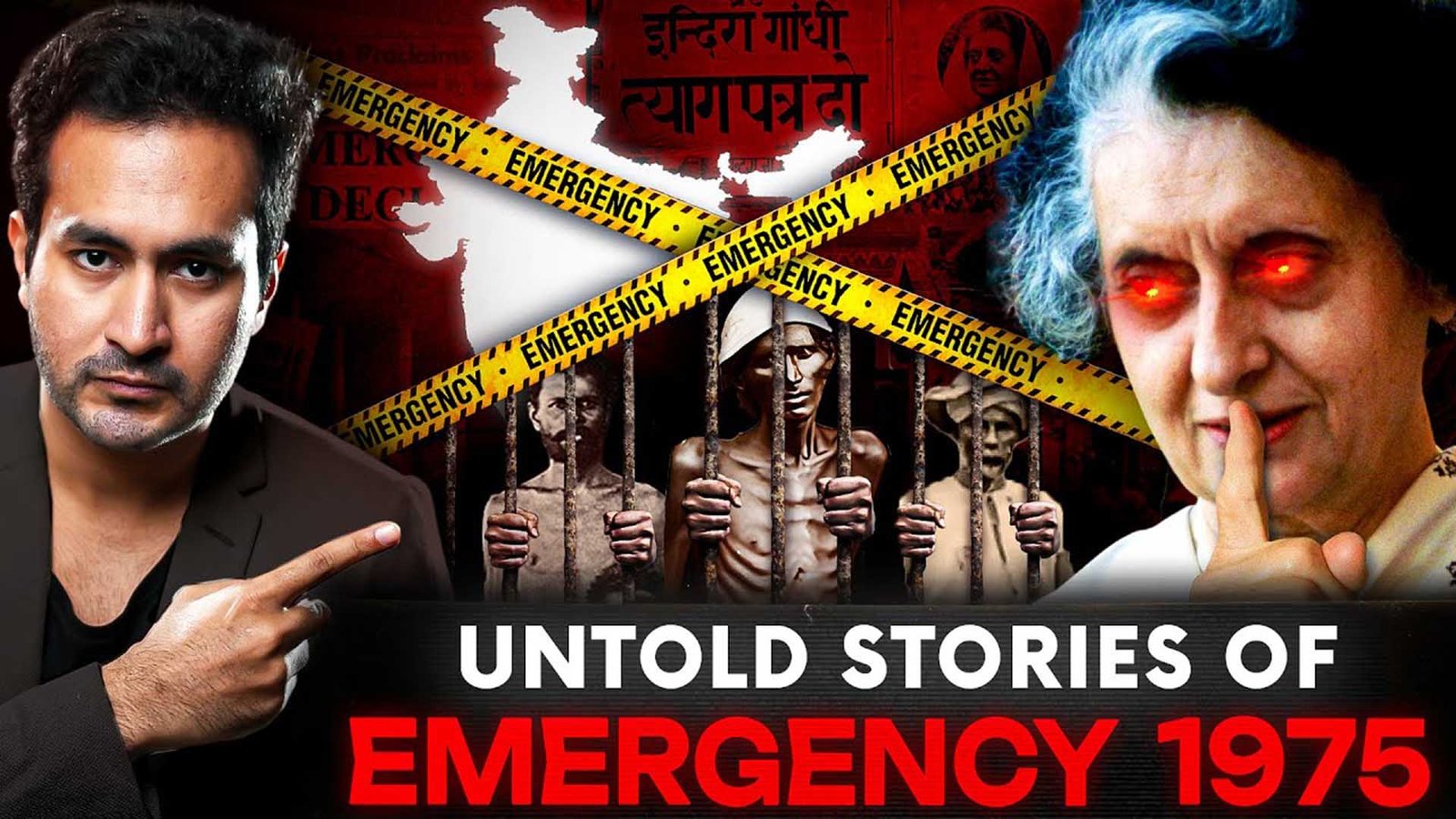
The period of the Emergency in India, declared on June 25, 1975, remains a highly debated and critical event in the nation’s democratic journey. Often referred to as a “black day” in Indian history, it marked a two-year phase where civil liberties were curtailed, and the political landscape underwent significant transformations.
The Context Leading to the Emergency
The decision to declare an Emergency was rooted in a confluence of political and social factors. In 1971, Prime Minister Indira Gandhi called for early general elections. While she secured a significant victory, her election from the Rae Bareli constituency was challenged by her opponent, Raj Narain, who alleged electoral malpractices.
On June 12, 1975, the Allahabad High Court found Indira Gandhi guilty of electoral offenses, leading to a stay on her removal by the Supreme Court, which allowed her to remain Prime Minister but barred her from participating in parliamentary proceedings or voting.
Concurrently, a growing wave of public discontent, fueled by inflation, corruption, and unemployment, found its voice under the leadership of socialist leader Jayaprakash Narayan. His call for a “total revolution” intensified the political climate. These events culminated in Indira Gandhi’s recommendation to President Fakhruddin Ali Ahmed to declare a state of Emergency, citing internal disturbances. The Emergency was officially declared on the night of June 25, 1975.
Suppression of Rights and Political Opposition
The declaration of Emergency led to an immediate and widespread crackdown on political dissent. Opposition leaders, including prominent figures like Jayaprakash Narayan, Morarji Desai, Atal Bihari Vajpayee, and L.K. Advani, were arrested overnight and imprisoned without trial. Reports from the time indicate that jails across the country were overcrowded, and political prisoners faced harsh and inhumane treatment.
Freedom of the press was severely restricted through strict censorship. News reports had to be pre-approved by the government, effectively silencing critical voices and controlling the flow of information to the public.
The Mass Sterilization Drive and Turkman Gate Incident
One of the most controversial aspects of the Emergency was the large-scale, forced sterilization drive aimed at population control. While family planning initiatives existed prior to the Emergency, the new policy implemented coercive measures, with government workers and teachers given targets for sterilizations. This led to instances where individuals were forcibly sterilized, regardless of their marital status or consent, often under unhygienic conditions, resulting in infections and, in some cases, fatalities.
The Turkman Gate incident in Delhi is a stark example of the period’s excesses. In a predominantly Muslim area, residents resisted forced sterilizations and the demolition of “illegal constructions.” This resistance was met with police violence, including lathi charges and open firing, leading to multiple deaths. Reports suggest that police entered a mosque where protestors had sought refuge, further escalating tensions.
Constitutional Amendments and Centralization of Power
During the Emergency, significant constitutional amendments were enacted to centralize power within the Prime Minister’s office. The 39th Constitutional Amendment Act, passed in August 1975, sought to remove judicial oversight over issues related to the President, Vice President, Prime Minister, and Speaker, effectively insulating the Prime Minister from legal challenges.
Later, the 42nd Constitutional Amendment Act, often referred to as a “mini-constitution,” introduced sweeping changes. It extended the term of Parliament and state assemblies, limited judicial review, and, most significantly, allowed the suspension of fundamental rights, including the right to life, personal liberty, and freedom of expression. This enabled the government to detain individuals without trial and suppress dissent without judicial recourse.

The End of the Emergency and its Legacy
In January 1977, defying expectations of continued authoritarian rule, Prime Minister Indira Gandhi unexpectedly announced general elections. The Congress party suffered a significant defeat, and the Janata Party came to power. One of their first acts was to introduce the 44th Constitutional Amendment Act, which largely reversed the changes made during the Emergency, reinstating fundamental rights and limiting the government’s power to declare an Emergency.
The 1975 Emergency remains a potent reminder of the fragility of democratic institutions and the importance of safeguarding civil liberties. It continues to be a subject of historical analysis and political discourse, prompting ongoing reflection on the balance of power within a democracy.