


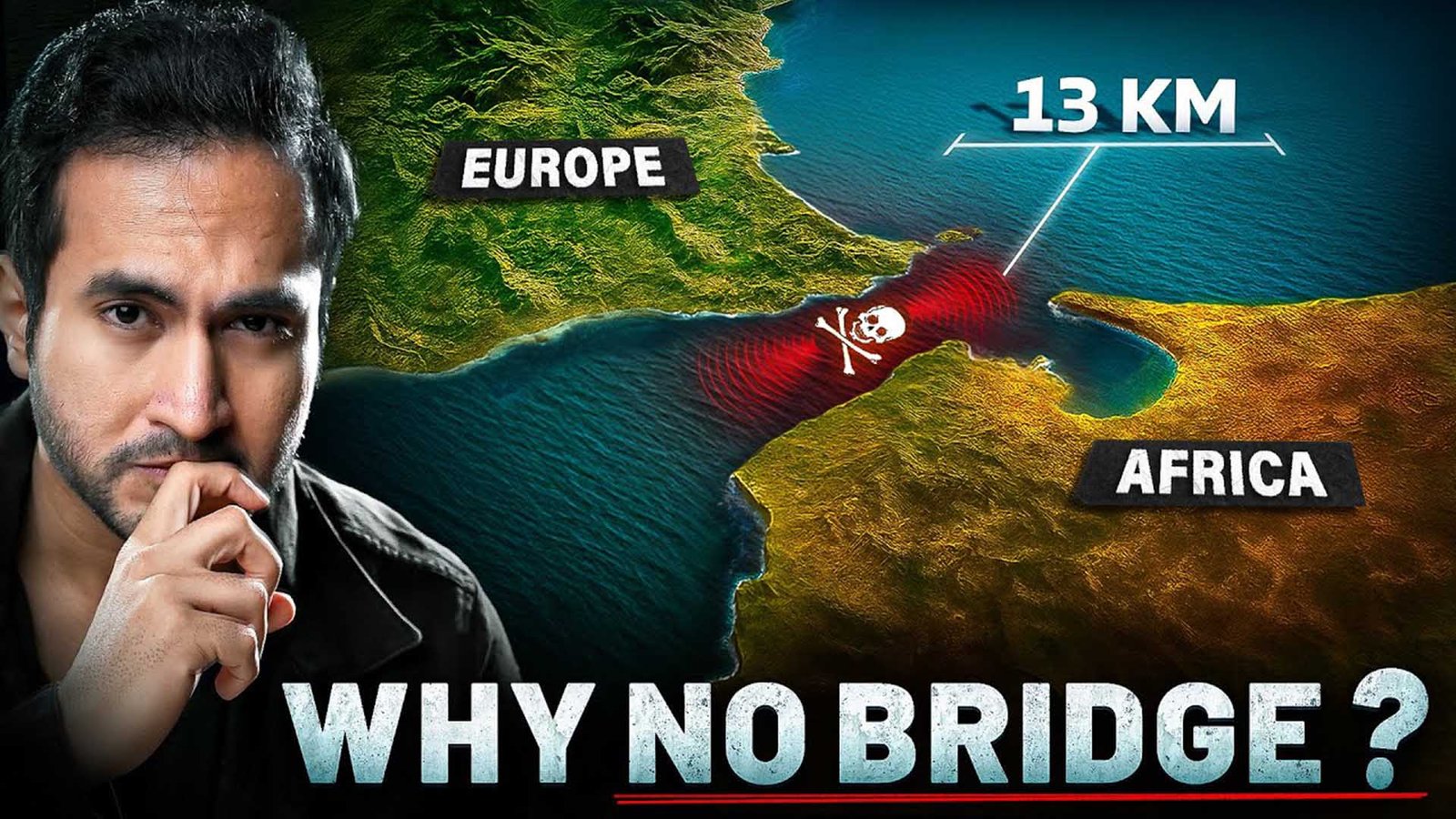
The Strait of Gibraltar, a narrow 14-kilometer stretch of water separating Spain and Morocco, presents an alluring, yet unconquered, challenge for engineers worldwide. Despite its seemingly short distance and the immense strategic advantages a direct link would offer, no bridge or tunnel has ever been successfully built between Europe and Africa. This article explores the numerous obstacles that have consistently thwarted such ambitious projects for over a century.
A Dream of Atlantropa
In the 1920s, German architect Herman Sörgel proposed a radical vision: “Atlantropa.” His plan involved constructing a massive hydroelectric dam across the Strait of Gibraltar, which would lower the water level of the Mediterranean Sea by hundreds of feet. This would reclaim vast expanses of land, creating a new continent and physically connecting Europe and Africa. While Sörgel’s concept was meticulously detailed, the sheer scale, astronomical cost, and potential environmental devastation ultimately prevented its realization.
The Unforgiving Depths and Shifting Earth
Decades of research by Spanish and Moroccan companies have revealed the formidable geological challenges of the Strait of Gibraltar:
- Extreme Depths: The shortest route across the strait plunges to depths of 800 meters, making the construction of conventional bridge pillars incredibly difficult and expensive. For comparison, the deepest point of the Channel Tunnel between the UK and France is only 180 meters.
- Unstable Seabed: The seabed is composed of “breccia,” a weak and porous mixture of clay and small rocks. This unstable material makes drilling and anchoring bridge foundations extremely challenging, as the surrounding earth could easily collapse.
- Active Fault Line: Beneath the Strait of Gibraltar lies the fault line between the African and Eurasian tectonic plates. This active seismic zone experiences regular tremors, posing an immense risk to any permanent structure. Building a bridge with pillars on two constantly grinding plates or a tunnel through a major fault line presents an unprecedented engineering hurdle.
Treacherous Currents and Heavy Traffic
Beyond the geological complexities, the Strait of Gibraltar presents other significant hurdles:
- Powerful Ocean Currents: The strait is a choke point where the warm, less dense water of the Mediterranean Sea meets the cold, denser water of the Atlantic Ocean. This interaction creates strong convection currents and powerful upwellings, resulting in surface currents that can reach speeds of 11 kilometers per hour. These turbulent conditions make surveying and construction extremely difficult.
- Busiest Shipping Lane: The Strait of Gibraltar is one of the busiest shipping lanes in the world, with approximately 100,000 ships and 18,000 oil tankers passing through annually. Any bridge or tunnel project would need to ensure minimal disruption to this vital global trade route, requiring a minimum clearance of 70 meters above sea level for bridges, adding to the construction complexity.
Diplomatic Hurdles and Future Prospects
Beyond the engineering and geological challenges, political tensions between Spain and Morocco have also periodically stalled progress. Disputes over territories like Ceuta and Melilla have led to diplomatic standoffs, halting joint efforts to bridge the gap.
Despite these challenges, the dream of connecting Europe and Africa remains. Current plans focus on constructing three tunnels (two for railway tracks and one for service) along a longer, 28-kilometer route where the seabed is shallower (around 300 meters deep) and the geological conditions are more favorable. This tunnel project aims to significantly reduce travel time between Morocco and Spain, fostering trade and connectivity.
Ultimately, the successful realization of this ambitious project hinges not only on overcoming immense engineering feats but also on building a bridge of trust and understanding between the nations involved. The Strait of Gibraltar stands as a powerful symbol of the intricate interplay between human ambition, natural forces, and diplomatic will.