


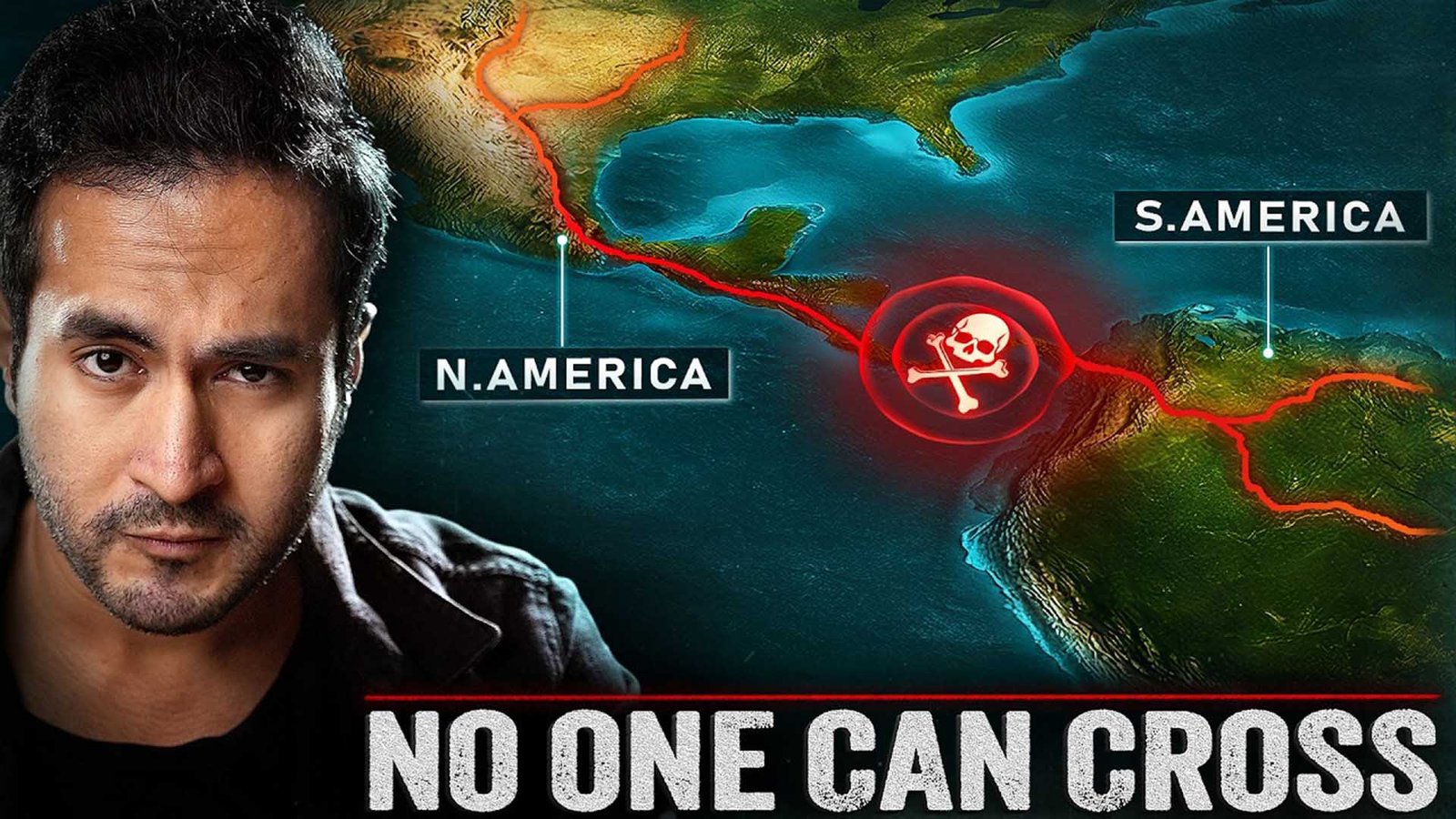
The Darien Gap, a 100-kilometer stretch of dense jungle and treacherous terrain, stands as the only missing link in the ambitious Pan-American Highway, a monumental road project designed to connect Alaska to Argentina. Despite numerous attempts and significant investment, this seemingly small area has resisted all efforts to build a road, earning it a reputation as one of the most challenging environments on Earth.
A History of Failed Conquests
For centuries, the Darien Gap has thwarted colonizers and explorers alike. From 17th-century Scottish attempts to establish a trading colony to 19th-century American naval expeditions, the harsh realities of the region proved too formidable. Deadly diseases, unforgiving terrain, and fierce wildlife led to countless casualties and abandoned ventures. Even as vast empires colonized the rest of the Americas, the Darien Gap remained an untouched, blank space on maps.
Nature’s Impregnable Fortress
The geographical challenges of the Darien Gap are immense:
- Torrential Rivers: Over 100 fast-flowing rivers crisscross the landscape, making transportation and construction incredibly difficult.
- Extreme Rainfall: With nine months of continuous rain annually, the ground transforms into deep, impassable mud, hindering any progress.
- Dense Swamps: The Atrato River Basin, a vast and deep swamp, can swallow structures whole, rendering traditional bridge or road construction impossible.
- Deadly Wildlife: The jungle is home to a dangerous array of venomous snakes, scorpions, jaguars, and crocodiles, posing a constant threat to human life.

Beyond Geography: Political and Economic Barriers
While the natural environment presents formidable obstacles, other factors have also played a significant role in keeping the Darien Gap road-free:
- Disease Control: In the mid-20th century, outbreaks of foot-and-mouth disease in South America led to concerns that a connecting road could facilitate the spread of epidemics to North America, resulting in a 20-year moratorium on construction.
- Indigenous Resistance: Local indigenous tribes, such as the Embera-Wounaan, have fiercely opposed road construction, fearing the destruction of their ancestral lands, culture, and way of life.
- Drug Trafficking and Security: The Darien Gap currently acts as a natural barrier against the flow of illegal drugs from South America to North America. Building a road would essentially create a “red carpet” for drug cartels, exacerbating an already significant problem.
- Panama Canal Revenue: The Panama Canal generates billions of dollars annually in tolls for the United States and Panama. A direct road through the Darien Gap could bypass the canal, leading to substantial financial losses for both nations.
- Illegal Immigration: The prospect of a direct road raises significant concerns about an uncontrolled surge of illegal immigration into North America, particularly the United States. The Darien Gap currently serves as a perilous, albeit existing, migration route, and a road would significantly ease this journey, leading to immense pressure on borders.

The Darien Gap: A Boundary Where Humanity Meets Its Match
The Darien Gap stands as a testament to nature’s enduring power. It is a place where human ambition and engineering prowess have repeatedly been humbled. Its wild, mysterious, and dangerous character continues to serve as a natural barrier, protecting ecosystems, indigenous cultures, and international security in ways that constructed walls or fences never could. It is a vivid reminder that some boundaries are not meant to be crossed, and in this unconquered territory, nature reigns supreme.